
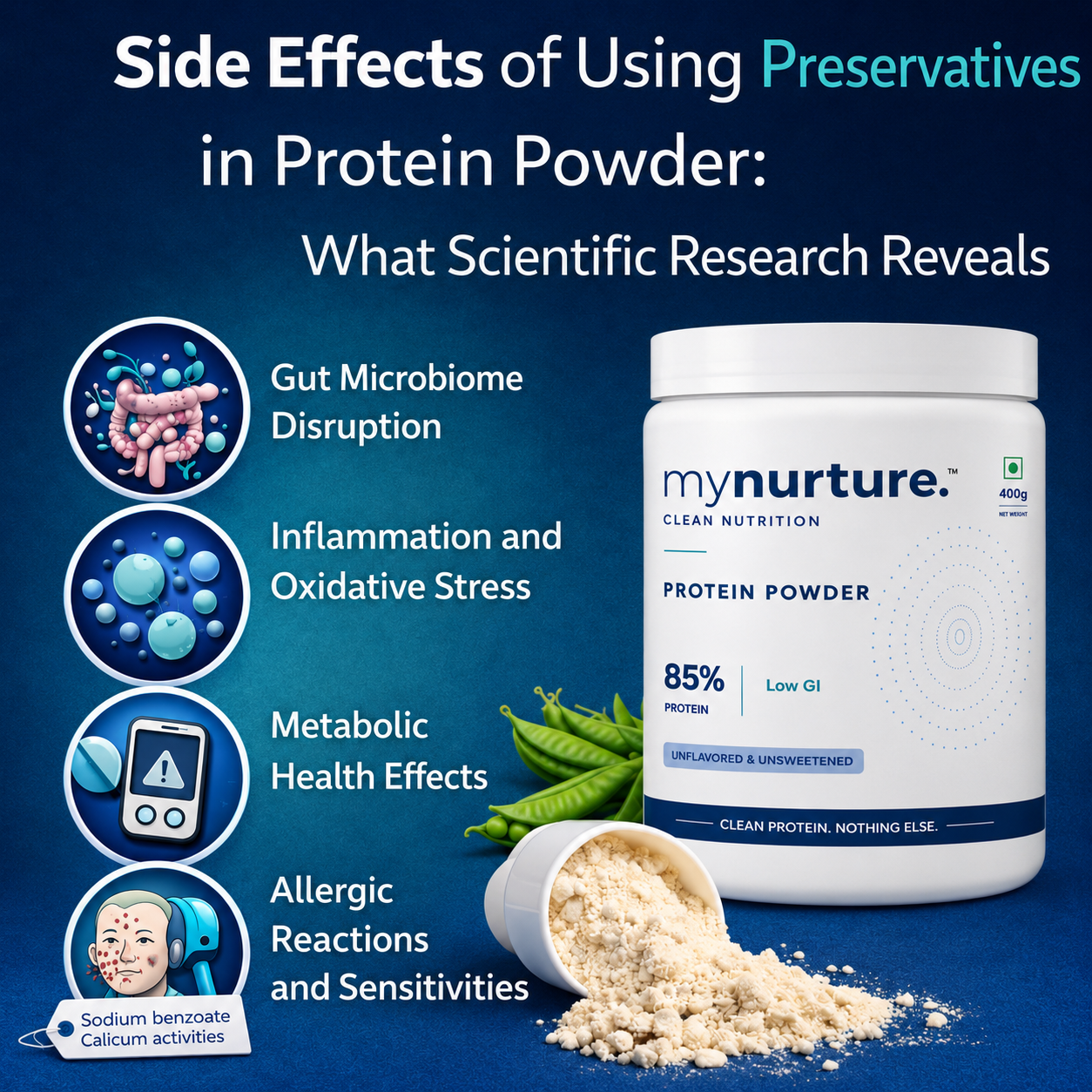
Side Effects of Using Preservatives in Protein Powder: What Scientific Research Reveals
Protein powders are often perceived as pure nutrition, but many commercial products contain preservatives to extend shelf life, prevent microbial growth, and maintain texture and flavor. While preservatives are approved for food use within regulated limits, regular long-term intake through daily supplements may raise health concerns.
Why Preservatives Are Added to Protein Powders
Preservatives help manufacturers prevent spoilage and bacterial growth, extend shelf life during storage and transport, and maintain color, flavor, and consistency.
Common preservatives found in protein powders include sodium benzoate, potassium sorbate, calcium propionate, BHA, and BHT.
1. Gut Microbiome Disruption
The gut microbiome plays a critical role in digestion, immune regulation, and metabolism. Research suggests that certain food preservatives may negatively affect beneficial gut bacteria. Long-term exposure may promote gut microbial imbalance, and dysbiosis is linked to inflammation, insulin resistance, and digestive disorders.
2. Increased Inflammation and Oxidative Stress
Several preservatives, particularly synthetic antioxidants like BHA and BHT, have been linked to oxidative stress and inflammatory responses in experimental studies. Long-term exposure may increase free radical production, promote low-grade systemic inflammation, and stress liver detoxification pathways.
3. Potential Effects on Metabolic Health
Preservatives may indirectly influence metabolic health through gut and inflammatory pathways. Research suggests long-term intake of certain preservatives may interfere with glucose metabolism, increase insulin resistance risk, and contribute to metabolic syndrome.
4. Allergic Reactions and Sensitivities
Some preservatives are known to trigger adverse reactions in sensitive individuals, especially when exposure is chronic. Reported effects include headaches, skin rashes, digestive discomfort, and asthma-like symptoms.
5. Potential Neurological and Behavioral Effects
Although data in humans is limited, animal and cellular studies suggest that long-term exposure to certain preservatives may influence nervous system activity through increased neural oxidative stress and altered neurotransmitter balance.
6. Regulatory Safety vs. Long-Term Daily Use
Food preservatives are approved based on acceptable daily intake values. However, those values do not always account for daily supplement use and combined exposure from multiple processed foods.
Why This Matters for Protein Powder Users
Protein powders are often marketed as health-supporting products, yet preservatives add no nutritional value, increase chemical load on the body, and may counteract gut and metabolic health benefits.
How to Reduce Preservative Exposure
Choose protein powders with minimal ingredient lists, opt for preservative-free or clean-label products, select unflavored or naturally flavored options, and store products properly to avoid the need for strong preservatives.
Final Takeaway
Preservatives help keep protein powders stable and safe, but long-term repeated exposure may have consequences, particularly for gut health, inflammation, metabolic balance, and sensitivity reactions.
While occasional intake is unlikely to cause harm, relying on preservative-heavy protein powders daily may undermine long-term wellness goals. Choosing cleaner formulations with fewer additives is a science-aligned approach to better health.